


Why Is Fall Tree Pruning Beneficial Before Winter in Calgary?

Fall tree pruning can help reduce winter damage by removing dead, broken or hazardous branches before snow and wind put them under more stress. It also gives you a clearer plan for protecting your property and keeping your trees healthy. The key is selective care: major tree pruning involving healthy branches is often better scheduled for late winter.
That branch over your garage has probably crossed your mind more than once. Will it hold up under heavy snow? Does it need attention, or are you worrying about a perfectly healthy tree?
You deserve an answer you can trust. At Evergreen LTD, our approach to tree pruning in Calgary starts with understanding the tree, its surroundings and what actually needs to happen.
How can tree pruning help prevent winter storm damage?
Snow adds weight to branches. Wind adds movement and force. Existing defects, including broken limbs, decay and weak attachments, can make a branch more vulnerable when those loads arrive.
Targeted tree pruning can remove a known concern before it lands on your roof, fence or vehicle. Depending on the tree, an arborist may also recommend carefully reducing a branch’s reach to reduce leverage.
The International Society of Arboriculture’s tree-risk guidance identifies pruning defective branches as one way to manage risk. It also warns that inappropriate pruning can weaken trees.
That is why cutting more is not automatically better. A large, healthy canopy does not need a heavy trim simply because winter is coming. The goal is to address a specific problem while preserving as much healthy structure as practical.
No arborist can make a tree stormproof. Thoughtful tree pruning can, however, address identifiable branch hazards before the weather tests them.
Fall is a good time to assess your trees. Is it always the best time for tree pruning?
No. Fall tree pruning should be based on the species, condition and purpose of the work.
As leaves drop from deciduous trees, their branch structure becomes easier to inspect. That helps an arborist see rubbing limbs, old damage and attachments that deserve a closer look. It is a useful opportunity to decide what needs attention now and what can wait.
University of Minnesota Extension recommends late winter to early spring for most pruning. Colorado State University Extension cautions against fall pruning that could interfere with winter hardiness or leave exposed wood vulnerable to cold damage.
For Calgary homeowners, the practical distinction is straightforward:
Dead, broken or hazardous branches: have them assessed promptly. Appropriate removal may be needed before winter.
Major reshaping or structural work on live branches: plan the timing around the species and tree health, often in late winter.
A healthy tree without a clear pruning need: monitoring may be the best recommendation.
Good tree pruning includes knowing when to leave a tree alone.

Calgary elm trees have a specific pruning window
If you have an elm, fall marks an important change. The City of Calgary states that elm pruning is prohibited from April 1 through September 30 to help prevent Dutch elm disease. The permitted pruning period runs from October 1 through March 31.
October therefore opens the window to assess and schedule elm tree pruning. It does not mean every elm needs work, or that every cut should happen immediately. An arborist should still consider the tree’s condition and the weather.
Healthy trees start with understanding what is happening below ground
A thinning canopy or dead branch can be a symptom of a wider problem. Cutting off the symptom does not necessarily solve its cause.
Our owner, Aaron Cull, has a B.Sc. in Botany and is an ISA Certified Arborist. That background informs how we consider tree biology, growing conditions and the purpose of each recommendation.
When assessing tree pruning needs, we consider the whole tree and its site. Soil moisture, root conditions, changes around the tree and previous damage may all deserve attention. Further investigation can be more useful than another round of cutting.
ISA’s plant health guidance explains that trees share soil, water and nutrients with surrounding plants, and that decline can have several underlying causes. Caring for the root zone belongs in the conversation alongside caring for the canopy.
Save money by doing the work your tree actually needs
Preventive tree pruning may help you avoid some damage and emergency work. Savings depend on the situation; no one can promise that a particular service will prevent a future repair bill.
There is another way to protect your budget: avoid unnecessary work.
At Evergreen LTD, we will not recommend removing a healthy, suitably located tree simply to sell a bigger job. We explain the concern, the options and why a recommendation makes sense. Where appropriate, those options can include selective tree pruning, monitoring or addressing growing conditions.
A tree’s health and its structural safety are related, but different. A leafy tree can still have a serious defect. If removal is warranted, you deserve a clear explanation of the risk and why preservation options are unsuitable.
ISA certification also comes with professional accountability. TreesAreGood.org provides access to ISA’s credential verification directory and explains that credential holders are held to a Code of Ethics. We welcome questions about qualifications and recommendations.
Peace of mind starts with a clear plan
You should not have to guess whether a branch needs attention every time snow is forecast. A fall assessment can help separate immediate concerns from routine maintenance.
From the ground and a safe distance, note broken or hanging limbs, visible cracks, a new lean, or changes around the base of the tree. A branch over a roof deserves consideration, but its location alone does not prove it is hazardous. Leaf loss in autumn does not prove it is dead, either.
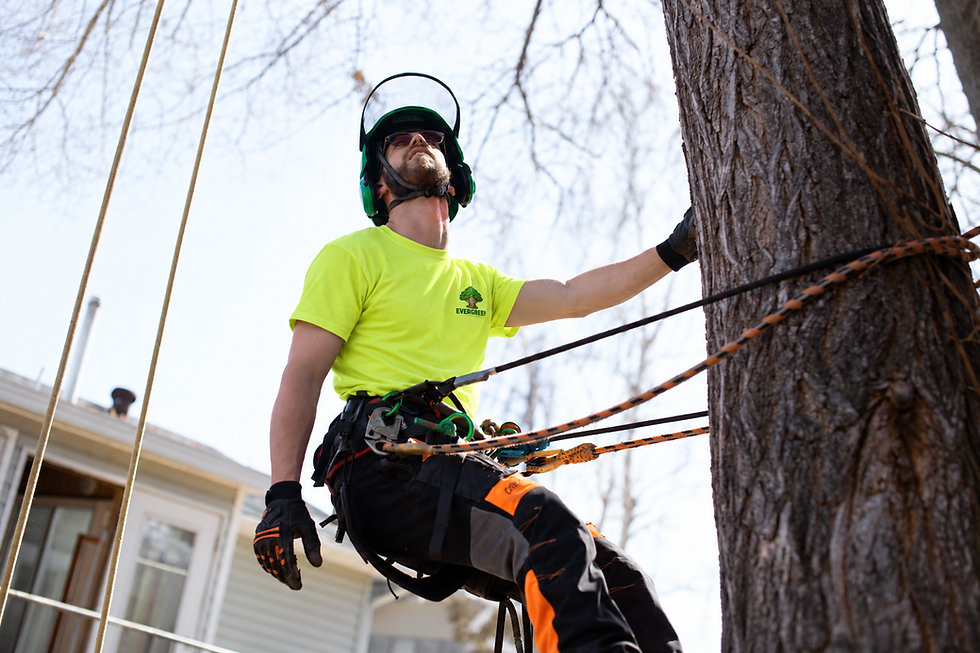
Keep people away from hanging branches or a visibly unstable tree. Leave climbing and overhead cutting to qualified professionals. If a branch involves power lines, contact the utility and stay clear.
Here is how to get started with Evergreen:
Tell us what concerns you. Contact our team about your trees and the areas you want to protect.
Get an assessment and clear recommendations. Understand what needs attention, the suitable timing and the proposed cost.
Approve the appropriate work. We can arrange the recommended service and explain any follow-up care or monitoring.
Fall tree pruning has the most value when it solves a real problem. Whether your tree needs a hazardous branch removed, a later tree pruning appointment or simply a watchful eye, you can head into winter knowing the next step.
Comments