


How Can a Large Tree Be Removed Without Damaging My House?

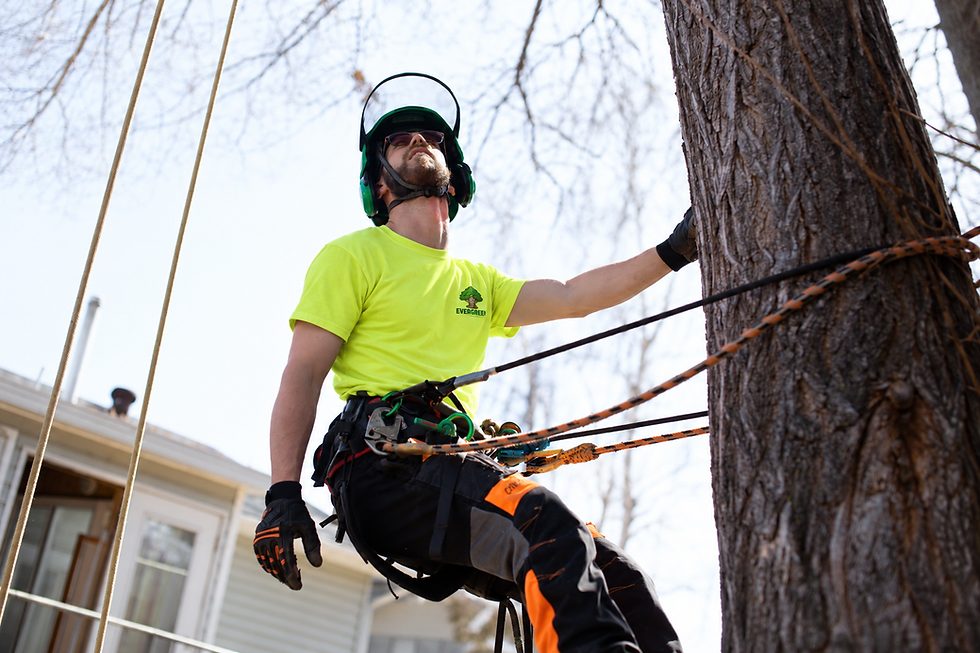
A large tree close to your home can become a serious concern if it is dead, declining, damaged or growing too close to the structure.
Large trees can weigh several tons, and individual branches can be heavy enough to damage roofs, gutters, windows, fences, vehicles and other parts of the property. When there is not enough open space to safely fell the entire tree in one direction, the removal usually needs to happen in controlled sections.
For homeowners in Calgary and surrounding areas, the safest approach is to have the tree and property assessed before any cutting begins.
Evergreen LTD's ISA Certified Arborists can evaluate the tree, surrounding structures and access conditions to determine the safest removal approach.
Why Large Trees Near Homes Require Extra Care
A large tree can create risk long before removal begins.
Dead branches may fall without warning. Cracks, cavities, damaged roots, decay or an unusual lean can also affect the tree's stability.
When the tree is close enough to reach the house if it fails, those conditions deserve professional attention.
The removal process introduces additional risks. Branches need to be controlled, workers may need to climb or use aerial equipment, and large pieces of wood must be brought safely to the ground.
Trying to cut the tree at the base and direct the entire trunk away from the house may not be appropriate when there is limited space.
Concerned about a large tree near your home? Evergreen LTD can assess its condition and determine whether pruning, monitoring or removal is the most appropriate next step.
Large Trees Are Often Removed in Sections
When a tree cannot be safely felled whole, arborists can dismantle it piece by piece.
This may begin with smaller branches and progress toward larger limbs and sections of the trunk.
Ropes and rigging equipment can be used to control how sections move and where they are lowered. Depending on the size of the tree and the surrounding property, the crew may also use aerial lifts, friction devices or other specialized equipment.
The goal is to avoid allowing heavy pieces to fall freely toward the house or other structures.
Each removal plan is different. A tree beside an open lawn may require a different approach than one growing between a home, garage, fence and neighbouring property.
Protecting the Property Goes Beyond the House
The tree itself is only one part of the removal plan.
Crews also need to consider how equipment will enter and move through the property.
Heavy machinery can damage lawns, paving, garden beds or driveways if access is not planned properly. Underground irrigation lines, septic systems and utilities may also need to be considered before equipment or stump grinders are brought onto the site.
A professional removal plan should look at where branches and trunk sections will land, where equipment can safely operate and how debris will be removed afterward.
If access around your property is limited, Evergreen LTD can evaluate the site before removal and plan the work around nearby structures, landscaping and access points.
Can You Remove a Large Tree Yourself?
Small branches that can be reached safely from the ground may sometimes be manageable for a homeowner.
Large-tree removal near a house is very different.
Tree lean, branch weight, decay, wind and hidden structural defects can all affect how a tree moves once cutting begins. Even when a tree appears likely to fall in one direction, its movement can change quickly.
The risks increase when ladders, chainsaws, climbing, rigging or heavy equipment are involved.
Trees close to overhead power lines require even greater caution. Branches, ropes, ladders and equipment can all create serious electrical hazards.
If the tree could reach your house, a neighbouring property, a road, a vehicle or utility lines, professional removal is the safer option.
When Should You Call an Arborist?
It is worth having a large tree assessed when branches extend over the house, the tree is visibly declining, the trunk is damaged, roots have been disturbed or the tree has developed an unusual lean.
You should also seek professional help when removal would require climbing, aerial equipment, rigging or work near power lines.
An assessment can also determine whether the entire tree actually needs to come down. In some cases, targeted pruning or ongoing monitoring may still be appropriate.
If you are unsure whether removal is necessary, Evergreen LTD can inspect the tree first and recommend the safest course of action for your property.
Ask What the Removal Plan Includes
Before hiring a tree removal contractor, ask how the work will be completed.
The plan should account for the tree's size and condition, nearby structures, access, equipment, debris handling and the protection of surrounding property.
It is also worth confirming whether stump grinding and cleanup are included and whether the contractor carries appropriate insurance.
A clear plan helps reduce surprises once work begins.
Remove the Tree With a Plan, Not a Guess
When a large tree is close enough to damage your home, safe removal comes down to control.
Branches and trunk sections may need to be removed gradually, equipment access needs to be planned, and the surrounding property should be considered before the first cut is made.
Evergreen LTD provides professional tree removal for Calgary-area homeowners and can assess large or hazardous trees before work begins.

Comments