


Can Chinook Winds Trigger Early Tree Growth That Later Freezes?


If you’ve lived in Calgary long enough, you’ve felt it happen. One day it’s deep winter, the next it feels like spring. Snow melts, temperatures jump, and suddenly your yard looks like it’s waking up far too early.
Many Calgary homeowners notice swelling buds, soft ground, or even signs of new growth during a Chinook, and then worry when winter inevitably returns. So the question comes up every year: Can Chinook winds actually trigger early tree growth that later gets damaged by freezing temperatures?
The short answer is yes. And understanding how and why it happens is key to protecting your trees long-term.
What Chinook Winds Really Do to Trees
Chinooks are warm, dry winds that roll down the eastern slopes of the Rocky Mountains and can raise Calgary’s temperatures by 20°C or more in just a few hours. These events occur most often between November and March, right in the middle of dormancy season for trees.
For trees, temperature is one of the strongest biological signals. When prolonged cold suddenly gives way to warmth, trees can interpret that change as the start of spring. Internally, this can activate metabolic processes, increase sap flow, and begin the early stages of bud development.
The problem isn’t the warmth itself, it’s what comes next.
When temperatures drop back below freezing, newly activated tissues are far more vulnerable than fully dormant ones. Buds that have begun to swell, or cells that have taken up moisture, are more likely to suffer freeze damage when winter reasserts itself.
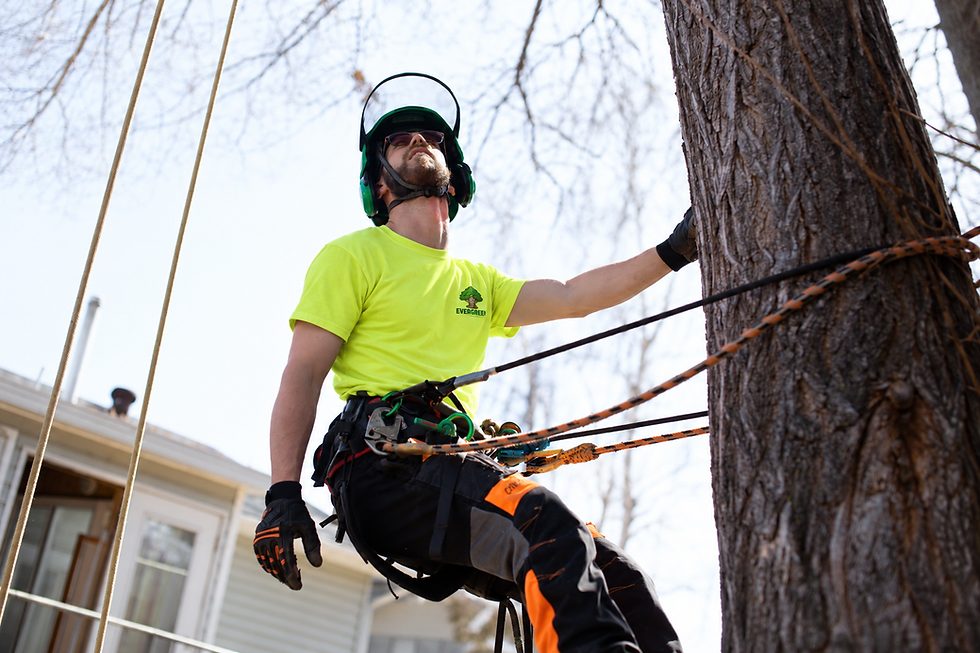
If you’ve noticed buds forming early or branches looking stressed after a Chinook, Evergreen’s certified arborists can assess whether real damage has occurred or if your tree is still within a normal response range.
Why Calgary Trees Are Especially Vulnerable
Calgary sits in a highly variable climate zone. Winter temperatures fluctuate more here than in many other Canadian cities, which means trees experience repeated freeze-thaw cycles.
Local observations and studies have documented cases where trees such as poplars, lilacs, and other early-responding species show bud swelling during February Chinooks, only to experience tissue death after late-winter cold snaps. The damage happens at a cellular level, where ice formation ruptures cell walls or dries out exposed tissues before the tree can recover.
Not every tree responds the same way. Species adapted to Alberta’s climate tend to tolerate these swings better, while trees planted near the edge of their hardiness range are far more likely to struggle.
Early Growth Isn’t Always Visible, But Stress Still Builds
One of the challenges with Chinook-related damage is that not all stress shows up immediately. Even when buds don’t visibly open, internal processes may still be disrupted.
Trees that repeatedly start and stop metabolic activity during winter can lose stored energy reserves. That energy is meant to fuel spring leaf-out and root development. When it’s depleted too early, trees may leaf out weakly, grow slowly, or become more susceptible to pests and disease later in the season.
This is why some trees appear “fine” in winter but struggle throughout the growing season without an obvious cause.
How Chinooks Affect More Than Just Trees
While trees are often the most noticeable victims, Chinooks also impact lawns, shrubs, and ornamental plants. Bulbs that break ground too early, turfgrass that begins photosynthesis during warm spells, and shallow-rooted plants exposed by melting snow can all suffer when temperatures drop again.
For trees planted in compacted or poorly drained soil, common in urban Calgary, these freeze-thaw cycles are even more damaging. Waterlogged soil followed by freezing can restrict root oxygen and increase the risk of long-term decline.
This is where professional assessment matters. What looks like “normal winter behaviour” one year can compound into real structural or health problems over time.
What Homeowners Can, and Can’t, Control
Chinook winds aren’t something you can prevent, but how your trees respond to them is influenced by long-term care.
Proper species selection, correct planting depth, healthy soil structure, and strategic pruning all improve a tree’s ability to handle temperature swings. Mature, well-established trees are far more resilient than young or stressed ones.
What homeowners should avoid is reacting too aggressively after a Chinook, such as pruning too early or fertilizing during winter warm spells. These actions can push trees further out of dormancy at exactly the wrong time.
Evergreen’s Role: Helping Trees Ride Out Calgary Winters
Chinooks are part of living in Calgary. They bring relief, but they also bring risk, especially for trees that are already under stress.
Evergreen LTD helps homeowners understand what’s normal, what’s concerning, and when intervention is actually needed. From winter damage assessments to long-term tree health planning, Evergreen focuses on protecting trees not just through one season, but across years of unpredictable weather.
If you’re unsure whether a Chinook has harmed your trees, or you want to make sure they’re prepared for future winters, expert guidance makes all the difference.

Comments