


Why Are There Holes in My Tree Bark?
- Sprig

- Mar 4
- 4 min read
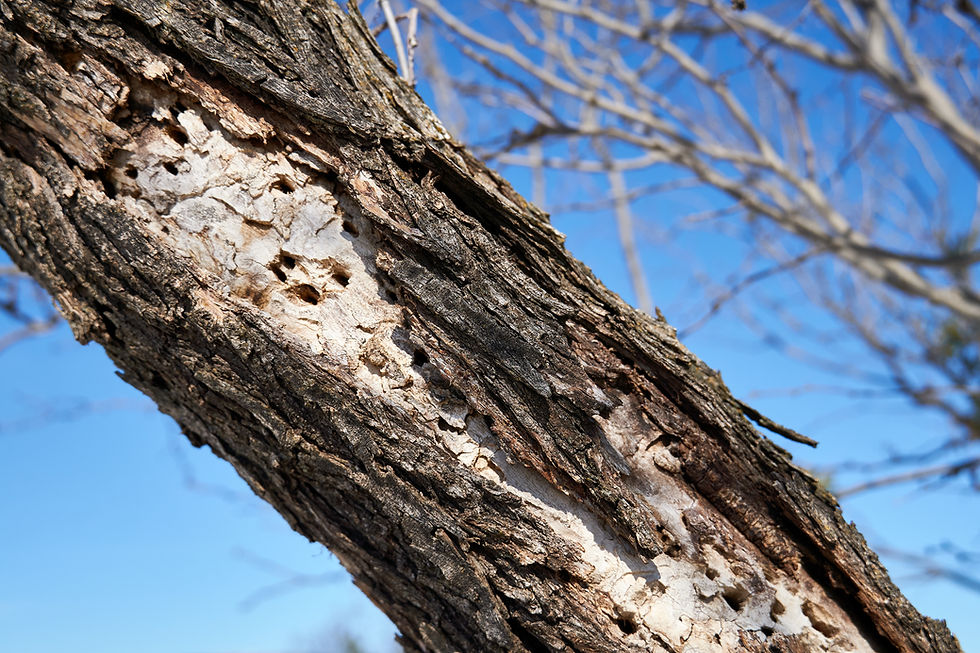
Holes in tree bark are a common sight for homeowners across Calgary. Sometimes they appear suddenly, leaving people wondering whether their tree is healthy or if something is seriously wrong.
In many cases, holes in bark are not caused by disease at all. Instead, they are often the result of wildlife activity, insects living beneath the bark, or environmental stress that makes trees more vulnerable to pests.
At Evergreen Ltd, we help Calgary homeowners understand what is happening with their trees and what steps, if any, need to be taken. With guidance from ISA Certified arborists, we can determine whether bark holes are part of a natural process or a sign your tree needs attention.
Woodpeckers Looking for Insects
One of the most common reasons for holes in tree bark in Calgary is woodpecker activity.
Woodpeckers are widespread across Alberta and often live in both forested areas and urban neighbourhoods. These birds drill into tree bark primarily to reach insects hiding beneath the surface. According to the Government of Alberta, woodpeckers frequently peck into trees to feed on insects such as beetle larvae and ants that live under the bark.
The holes they leave behind are usually small and round, sometimes appearing in clusters where the bird repeatedly searched for food.
While the damage may look concerning at first, woodpeckers are often responding to an existing insect problem. In other words, the holes may actually be a sign the bird is helping remove pests from the tree.
If you are seeing repeated woodpecker activity on a tree in your yard, it may be worth having the tree inspected to determine whether insects are present beneath the bark.
Insects Living Beneath the Bark
Another major cause of holes in tree bark is wood-boring insects, including bark beetles and other species that tunnel into trees.
These insects burrow through the bark to lay eggs. Once the eggs hatch, larvae begin feeding on the inner layers of the tree, which can disrupt the movement of water and nutrients throughout the trunk.
According to Natural Resources Canada, bark beetles and other wood-boring insects create visible holes in bark when entering or exiting a tree. These insects are far more likely to attack trees that are already weakened by drought, disease, or physical damage.
Over time, an infestation may cause additional warning signs such as:
Fine sawdust around the base of the tree
Peeling or cracking bark
Declining branches in the upper canopy
Increased woodpecker activity
Because insect damage occurs beneath the bark, it is often difficult for homeowners to diagnose the problem early.
If you are noticing holes combined with any of these symptoms, an ISA Certified arborist can evaluate the tree and determine whether treatment or removal is necessary.
Early intervention can often prevent pests from spreading to nearby trees.
Stress from Calgary’s Climate
Calgary’s climate also plays a role in why trees develop bark holes.
The city experiences long winters, dry conditions, and periodic droughts that can place stress on urban trees. According to the City of Calgary Urban Forestry program, stressed trees are more susceptible to pests and disease because they have fewer resources to defend themselves.
When a tree is weakened, insects are more likely to invade. Once insects move beneath the bark, their entry holes may become visible on the outside of the trunk.
This is why maintaining tree health is one of the most effective ways to prevent pest damage.
Proper watering during dry periods, avoiding trunk injuries, and planting species suited to Calgary’s climate can help trees stay resilient.
Sapsuckers and Distinctive Rows of Holes
In some cases, the holes you see may not come from insects or woodpeckers searching for food.
A bird known as the sapsucker drills rows of small holes in tree bark to feed on sap and the insects attracted to it. These holes often appear in neat horizontal lines around the trunk or branches.
Most healthy trees can tolerate minor sapsucker damage without serious long-term effects. However, repeated feeding on the same tree can sometimes weaken branches or create entry points for disease.
When Should You Be Concerned?
Not all bark holes require action. Trees have natural defense mechanisms that allow them to seal off damaged areas and continue growing.
However, you should consider a professional inspection if you notice:
Large numbers of holes appearing quickly
Sawdust or wood particles around the trunk
Peeling bark
Dead or dying branches
A rapid decline in the tree’s canopy
These signs may indicate a pest infestation that requires expert assessment.
At Evergreen Ltd, our team includes ISA Certified arborists who specialize in diagnosing tree health problems across Calgary. A professional inspection can determine whether the holes are harmless wildlife activity or a sign your tree needs treatment.
Protecting the Health of Your Trees
In most cases, holes in tree bark are part of the natural interaction between wildlife and trees in Calgary’s urban forest.
Woodpeckers searching for insects, bark-boring beetles, and sap-feeding birds are the most common causes. While the damage may appear alarming at first, it often reflects natural ecological processes rather than serious tree disease.
The key is understanding when holes are harmless and when they signal a deeper issue.
If you are unsure what is happening with a tree on your property, the best step is to have it evaluated by a qualified arborist.
Contact Evergreen Ltd to schedule a professional tree assessment with an ISA Certified arborist. We can help you identify the cause of bark damage, protect the health of your trees, and ensure your landscape continues to thrive in Calgary’s challenging climate.


KJC mình thấy bị nhắc hoài trong mấy group giải trí trực tuyến nên cũng bấm vào xem thử cho biết. Vào trang không bị rối như mình tưởng, kiểu thông tin chia khối rõ nên lướt một vòng là nắm được ý chính. Mình chỉ đọc nhanh phần giới thiệu, thấy họ có nhắc chuyện đặt ra gần 20 tiêu chí về minh bạch bảo mật gì đó, nghe ít nhất cũng có “khung” để người ta dựa vào chứ không nói cho vui. Mấy đoạn chữ không dài lê thê, tiêu đề nổi bật nên đọc kiểu lướt vẫn hiểu. Nói chung cảm giác trang làm gọn gàng, kéo xuống tới phần “cột mốc phát triển” là thấy…