


Can You Save a Tree After Hail Damage in Calgary?


Calgary's summer hailstorms can leave more than dented vehicles and damaged roofs. Trees often take a direct hit, leaving homeowners wondering whether they can be saved or if they need to be removed altogether.
The good news is that many trees recover remarkably well after hail damage. The key is knowing what to look for, what you can safely do yourself, and when it's time to have an ISA Certified Arborist assess the damage.
If your trees were caught in a recent Calgary hailstorm, Evergreen LTD is here to help you make the right decision before small problems become costly hazards.
Start by Assessing the Damage
After the storm has passed, take a careful look at your tree from a safe distance. Some damage is obvious, while other issues may not become apparent until weeks or even months later.
Look for signs such as:
Broken or hanging branches
Cracked or split limbs
Bark that has been torn away
Leaning trunks
Exposed roots
Branches resting on buildings or power lines
While trees often look severely damaged immediately after a hailstorm, appearances can be deceiving. Many deciduous trees are capable of producing new leaves and recovering throughout the growing season if their structural integrity remains intact.
If you're unsure whether your tree is safe, scheduling a professional inspection can provide peace of mind and prevent future problems.
How You Can Help Your Tree Recover
Not every damaged tree requires professional intervention. For minor injuries, there are several steps homeowners can take to support recovery.
Remove Broken Branches Correctly
Small broken branches should be pruned using clean, sharp tools. Proper pruning cuts allow the tree to naturally seal off damaged areas and reduce unnecessary stress.
Avoid removing healthy branches simply because the tree looks uneven after the storm. Over-pruning can weaken the tree even further and slow its recovery.
Keep the Area Clean
Remove fallen branches and debris from around the base of the tree. This not only improves safety but also makes it easier to monitor your tree for changes over the coming weeks.
Water During Dry Weather
Recovering trees use energy to replace damaged foliage and protect injured wood. Deep watering during Calgary's hot, dry periods helps reduce stress and supports healthy root function.
Add Mulch Around the Base
Applying a layer of organic mulch helps retain moisture, regulate soil temperature, and reduce competition from surrounding grass. Just be sure to keep the mulch several inches away from the trunk to avoid trapping excess moisture against the bark.
One common misconception is that damaged bark should be sealed with tree paint or wound dressing. Modern arboriculture has shown that trees are generally better at protecting themselves naturally, and wound dressings rarely improve healing.
When It's Time to Call an Arborist
Some hail damage goes beyond what homeowners should handle on their own.
Professional assessment is recommended if your tree has:
Large broken limbs
A split trunk
Multiple major branch failures
A noticeable lean
Damage high in the canopy
Branches near power lines or buildings
These situations can create significant safety risks and may compromise the long-term stability of the tree.
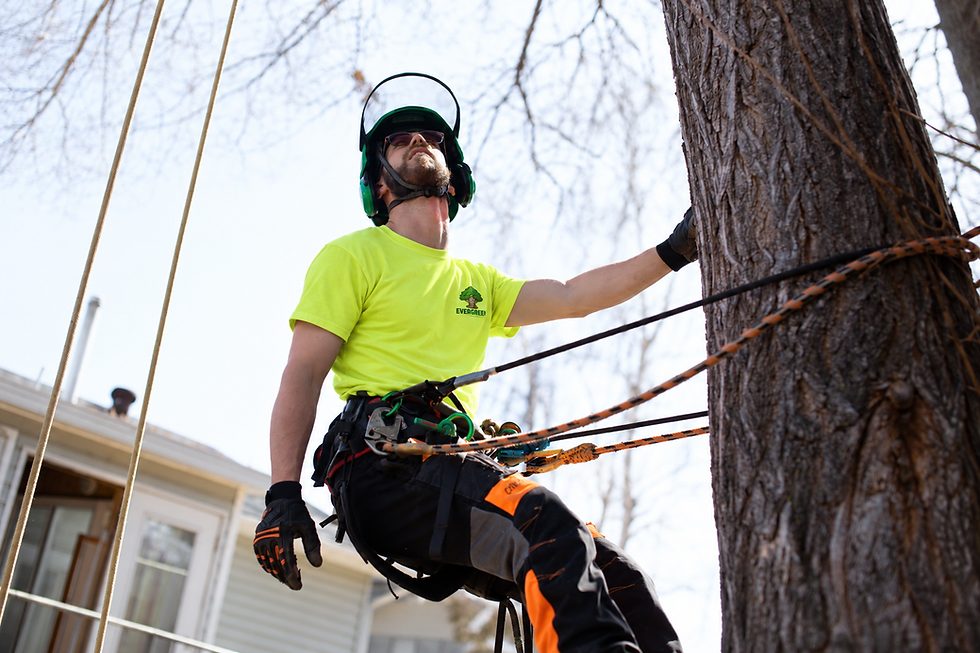
At Evergreen LTD, our ISA Certified Arborists evaluate both the visible damage and the structural condition of the entire tree. In many cases, corrective pruning, cabling, or bracing can preserve a tree that might otherwise appear beyond saving.
If you're uncertain whether your tree is safe, contact Evergreen before the damage has a chance to worsen.
Will Your Tree Recover?
Every tree responds differently after a hailstorm.
Recovery depends on factors including:
Tree species
Age and overall health
Amount of bark loss
Severity of structural damage
Growing conditions after the storm
Trees don't heal wounds the same way people do. Instead, they naturally isolate damaged wood to prevent decay from spreading. Healthy trees are often very effective at this process, especially when they receive proper care following a storm.
However, extensive bark loss, major trunk damage, or severe structural failures can reduce a tree's ability to recover successfully.
Watch for Delayed Damage
Not all hail damage appears immediately.
Over the following months, keep an eye out for:
Dead branches
New cracks
Poor leaf growth
Early leaf drop
Fungal growth
Signs of insect activity
Storm injuries can create entry points for decay and pests, making regular inspections especially important after a severe hail event.
If you notice your tree declining weeks or even months after the storm, don't assume it's too late. Early intervention can often prevent additional damage and improve the tree's chances of long-term survival.
Help Your Trees Stand Strong Against Future Storms
While no tree is completely protected from Calgary hailstorms, proactive care can significantly improve resilience.
Routine pruning removes weak or poorly attached branches before storms expose them. Maintaining healthy soil, proper watering practices, and scheduling periodic inspections all help strengthen trees over time.
Trust Evergreen LTD to Protect Your Trees
Hail damage doesn't always mean a tree has to come down. With the right care and a professional assessment when needed, many trees can continue thriving for years after a storm.
If your property was affected by recent hail, let Evergreen LTD help you determine the best course of action. Our ISA Certified Arborists provide honest recommendations based on the health, safety, and long-term future of your trees.
Comments